- About Us
- Our Work
- Resources
- Get Involved
- Blog
- Support Us
By Canopy Team on August 7, 2025
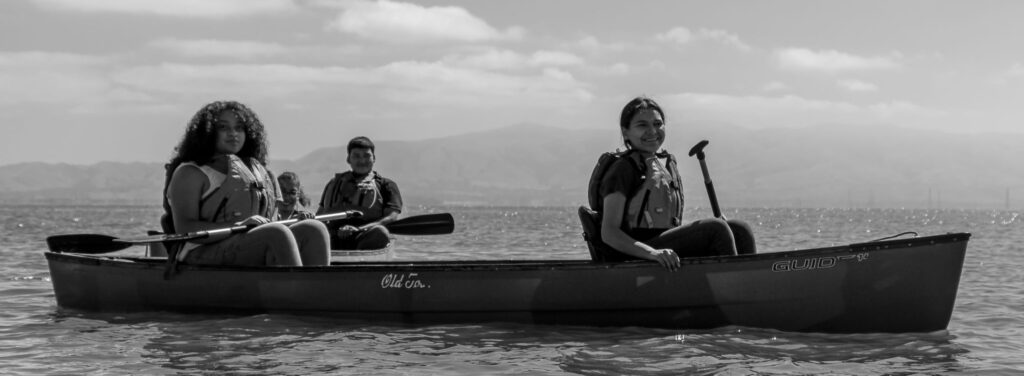
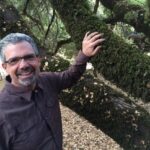
This blogpost was written by Mia Contreras (seen above in front of canoe) during her Summer 2025 Communications and Operations Internship with Canopy.
In summer of 2022, I joined Canopy as a Teen Urban Forester driven by a simple desire to make a difference in my community. I wasn’t sure where that desire would lead, but I knew I wanted to be part of something meaningful, something bigger than school initiatives. That summer, I found myself working alongside like-minded high school students; planting trees, surveying neighborhoods, and connecting with community members. I learned how deeply environmental issues intersect with social ones and how something as simple as a tree could represent equity, safety and hope.
As I worked in neighborhoods like East Palo Alto, North Fair Oaks, and Menlo Park, I witnessed environmental injustice up close. Some neighborhoods were full of greenery and shade, while others; usually lower-income and historically underserved, were hot, bare, and disregarded. That “green gap” wasn’t just a term anymore, it was real, and it made me realize that caring for a community isn’t just about people, it’s about the spaces they live in too.
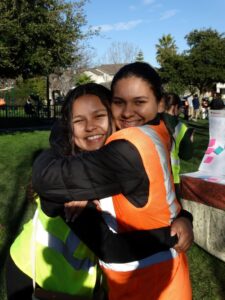 That summer sparked something in me. I left with tree knowledge, a full heart, and a growing commitment to justice in all its forms. As a TUF, I was passionate about making an impact, but growth isn’t always linear, and making a difference doesn’t mean ignoring your own needs. I was also grappling with a lot personally. Between trying to balance work, sports, academics, and the internal pressures I felt, it often felt like I was carrying too much. The work meant so much to me; the connections I made, the people I met, the neighborhoods I came to understand, but in the background, I was struggling with mental health challenges and trying to make sense of where I fit in this bigger picture. I was learning to navigate what it meant to be a first generation student, and being the first came with a lot of responsibilities, sacrifice, and weight.
That summer taught me more than I could have anticipated. It introduced me to the reality that making a difference doesn’t mean burning out or ignoring your needs. It taught me that to truly show up for your community, you have to show up for yourself; with compassion, grace and understanding. Taking a step back helped me reflect on my experience as a TUF, I sat with the lessons I learned and those lessons guided me towards a place of healing and an even greater commitment to change.
Today, I am a psychology student at Santa Clara University, pursuing a path that I hope will allow me to help bridge another gap: access to quality mental health care in underserved communities. The lessons I learned as a Teen Urban Forester still guide me every day, reminding me that justice takes many forms, and that every person, and space deserve to be tended to and cared for. Canopy shaped how I understand the world, and how I understand myself. And no matter where this path leads, I carry that summer with me, rooted within, reminding me why I started, and why I’ll continue to do the work that matters.

Mia (middle) holds a Santa Clara Broncos flag with her parents in 2024.
More than anything, coming back to Canopy affirmed that healing and action can coexist. That it’s possible to do meaningful work while also honoring your limits, your growth, and your evolving self. I’ve learned that advocacy isn’t about being perfect or having all the answers, it’s about showing up authentically, and continuing to plant seeds even if they don’t sprout immediately.
Looking back, that first summer with Canopy didn’t just open my eyes, it taught me to see the intersections between justice, environment, and mental health. It gave me a lens through which I now see my education, future career and my place in the world.
As I continue my journey, both academically and personally, I carry with me the belief that every person deserves to live in a space that feels safe, cared for, and seen. That trees, like people, need nurturing environments to thrive. And that change, like growth, often begins quietly.