
- About Us
- Our Work
- Resources
- Get Involved
- Blog
- Support Us
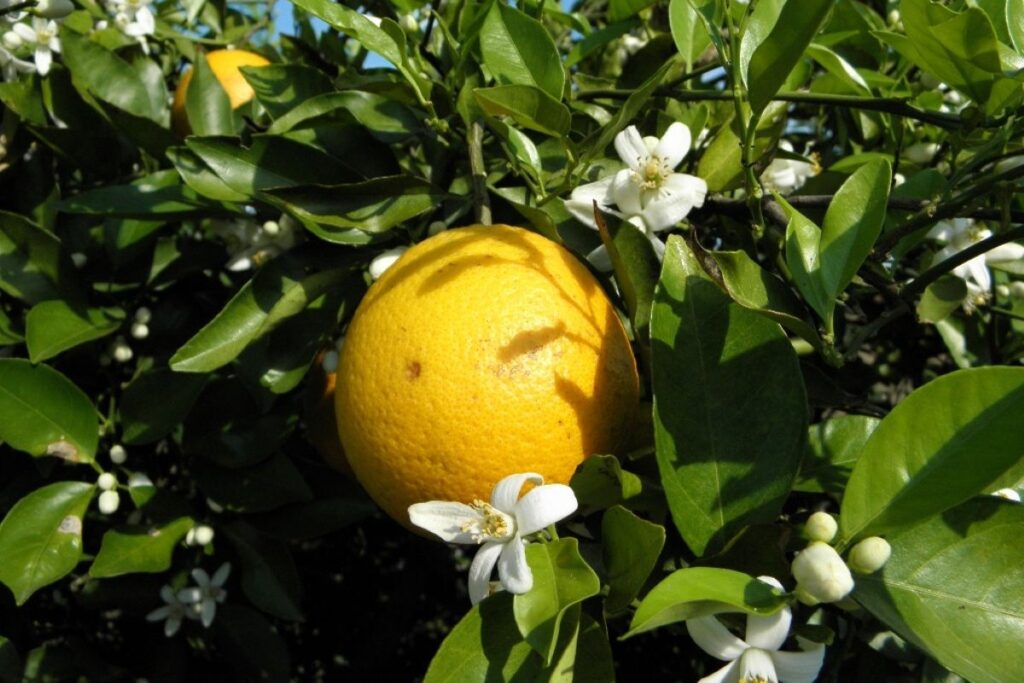
Potted fruit trees are a great way to introduce the benefits of trees to your home if you have limited space. Follow these potted fruit tree care guidelines for healthy growth and bountiful harvests.
View our “Caring for Potted Fruit Trees” brochure
Los árboles frutales en maceta son una forma excelente de introducir los beneficios de los árboles en tu hogar si tienes poco espacio. Sigue estas pautas para un crecimiento sano y cosechas abundantes.
Vea nuestro folleto “Guía para el cuidado de árboles frutales en maceta”
Place the tree in a spot outside that receives full or direct sunlight for 6-8 hours a day. Your fruit tree needs lots of sunlight to produce delicious fruit!
Coloque el árbol en un lugar exterior que reciba luz solar directa o total durante 6 a 8 horas al día. ¡Su árbol frutal necesita mucha luz solar para producir fruta deliciosa!
Feel the top couple inches of soil with your finger. If it’s dry, it’s time to water! Avoid overwatering and allowing the tree to stand in water for prolonged periods. The frequency of watering depends on the size of the container, the soil, the temperature, and how much wind the tree is exposed to. Larger containers and soils with a higher clay content retain water better, so they need to be watered less often. In the summer, be prepared to water multiple times each week.
Con el dedo, tantee los dos centímetros superiores de la tierra. Si está seca, ¡es hora de regar! Evite regar en exceso y dejar que el árbol permanezca en el agua durante periodos prolongados. La frecuencia de riego depende del tamaño de la maceta, la tierra, la temperatura y el viento al que esté expuesto el árbol. Los recipientes grandes y los suelos con mayor contenido de arcilla retienen mejor el agua, por lo que hay que regarlos con menos frecuencia. En verano, prepárese para regar varias veces por semana.
It is important to use well-draining potting soil. A mixture of potting soil, compost, and wood shavings is also acceptable. Citrus trees need slightly acidic soil to thrive.
Es importante utilizar tierra para macetas que drene bien. También es aceptable una mezcla de tierra para macetas, composta y virutas de madera. Los cítricos necesitan una tierra ligeramente ácida para desarrollarse.
Fertilizing and Mulching | Abonado y mantillo
Fertilize during the growing season (March – September). You can fertilize your trees using homemade compost. Citrus trees will appreciate compost that includes coffee grounds, or you can add a small amount of coffee grounds directly to the potting soil. Eggshells can be ground up into a coarse powder and mixed in with the potting soil to add calcium.
Add a layer of mulch several inches thick over the tree’s root ball and the potting soil to help retain moisture and avoid the soil becoming too hot or cold. Keep the mulch several inches away from the trunk of the tree.
Abone durante la temporada de crecimiento (de marzo a septiembre). Puede abonar sus árboles con composta casera. Los cítricos aprecian la composta que incluye restos de café, o puede añadir una pequeña cantidad de restos de café directamente a la tierra de la maceta. Las cáscaras de huevo se pueden triturar y mezclar con la tierra para añadir calcio.
Añada una capa de mantillo de varios centímetros de grosor sobre el cepellón del árbol y la tierra de la maceta para ayudar a retener la humedad y evitar que la tierra se caliente o enfríe demasiado. Mantenga el mantillo a varios centímetros del tronco del árbol.
Use clean, sharpened pruning tools between trees to prevent disease. Begin with the 5 D’s: Remove dead, dying, damaged, diseased, and disoriented (crossing or pointed straight up or down) branches to help the tree get enough light and maintain healthy growth. Thin out excessive growth to balance light exposure and increase air circulation. The best time to prune is during dormant season when the tree’s leaves have fallen off or it’s not actively producing flowers or fruit. Dead, broken, or diseased branches should be pruned when noticed at any time throughout the year to prevent further damage to the tree.
Utilice herramientas de poda limpias y afiladas entre los árboles para prevenir enfermedades. Retire las ramas muertas, moribundas, dañadas, enfermas y desorientadas (que se cruzan o apuntan hacia arriba o hacia abajo) para ayudar al árbol a recibir suficiente luz y mantener un crecimiento saludable. Pode el crecimiento excesivo para equilibrar la exposición a la luz y aumentar la circulación del aire. El mejor momento para podar es durante la temporada de letargo, cuando las hojas del árbol han caído o no está produciendo flores o frutos de forma activa. Las ramas muertas, rotas o enfermas deben podarse cuando se detecten en cualquier momento del año para evitar daños mayores al árbol.
If a hard frost or extreme heat is expected, shelter the tree by draping it with a frost blanket or shade cloth, to prevent damage. In the spring, after the final frost date, prune frost damaged branches. Avoid fertilizing and pruning during extreme heat. Increase watering and add mulch to retain soil moisture.
Si se prevé una helada fuerte o un calor extremo, proteja el árbol cubriéndolo con una manta antiescarcha o una tela de sombreo para evitar daños. En primavera, después de la última helada, pode las ramas dañadas por el frío. Evite fertilizar y podar durante el calor extremo. Aumente el riego y añada mantillo para retener la humedad del suelo.
Container Size and Repotting | Tamaño del recipiente y replantación
As the tree grows, increase the container size to 10–15 gallons. This will be big enough to support the tree, but small enough to move around. Re-pot the tree every year or two to prevent the roots from becoming pot bound. After the tree reaches its final size, replace the soil every 3–5 years. The container MUST have drainage holes. Drilling extra holes is an easy way to improve drainage with wood or plastic pots.
A medida que el árbol crezca, aumente el tamaño del recipiente de 10 a 15 galones. Será lo bastante grande para sostener el árbol, pero lo bastante pequeño para poder moverlo. Trasplante la maceta cada uno o dos años para evitar que las raíces se atasquen. Cuando el árbol alcance su tamaño definitivo, sustituya la tierra cada 3 a 5 años. El contenedor DEBE tener agujeros de drenaje. Perforar agujeros adicionales es una forma sencilla de mejorar el drenaje en macetas de madera o de plástico.
Harvesting Fruit | Cosecha de la fruta
In English:
En español:
How often should I water my tree?
For a potted fruit tree, you should water when the soil is dry a few inches below the surface. You can test the soil by pushing your finger into the soil and seeing how much soil clings to it. Dry soil will not cling or will leave a light dust on your fingertip. Moist soil will pull up with small clumps of soil clinging to it.
For a tree that has been planted in the soil, there is no hard rule, but common practice dictates that about one gallon per square foot of tree canopy per week should be applied during the hottest months, with a reduction in water during cooler months. Don’t forget to account for the rainy season, if standard rainfall takes place.
Plants make their own food and do not need to be fed. Sometimes, plants are deficient in particular nutrients since they are not able to draw these in from their surroundings. Nutrients are not food, but they help trees in the process of creating their food. Specific nutrient deficiencies can be diagnosed on a case-by-case basis by working with an arborist or carefully researching using scientific references. Be careful to avoid over-application of nutrients, as wood chips and/or compost will often suffice.
Most trees, including fruit trees, do not need to be fertilized. If you observe discoloration, undersized fruit, or other symptoms associated with a nutrient imbalance, start with an application of organic compost and wood chips.
How and when should I prune my fruit tree?
Winter is the best and easiest time to prune many deciduous fruit trees, when the leaves are off, and the structure is easily visible. Apricots, however, should be pruned during dry weather, ideally during July or August. Rain within about six weeks of pruning can increase the likelihood of a fungal disease called Eutypa dieback. Pears should be pruned in either winter or summer, but not in spring or autumn. This is because the bacterial disease fire blight only spreads when the weather is both warm and wet. Pruning at the correct time of year eliminates the need to sanitize tools in between cuts.
Evergreen fruit trees should be pruned during warm weather, when there is no chance of frost. Although the Bay Area does not get heavy frost, even a light frost can damage fresh pruning wounds on citrus and some other broadleaf evergreens.
Prune the tree for the shape you would like, but do not remove more than ⅓ of live tissue within any calendar year. Make sure to prune back to a branch union whenever possible, avoiding branch stubs. Cuts should be made at a 45° angle. When a heading cut must be made, expect heavy sprouting, and make a plan to prune the sprouts the following year.
Additional tips and resources can be found at the UC Master Gardeners website.
What is fruit thinning, and why should I do it?
Many fruit trees set more fruit than they can sustain once the fruit matures. This is because their wild ancestors made tiny fruits and fruit size has been increased over centuries through selective breeding without a corresponding reduction in the number of fruits. Lack of thinning can lead to underdeveloped fruit, pest or disease problems in the fruit, and broken branches from the excess weight. The best time to thin fruit is when the fruit is approximately ¾ inch in diameter. Some species will drop a substantial portion of their fruit naturally, typically in May or June, so thinning should be done after this occurs.
Additional resources can be found at the UC Master Gardeners website.
I’ve done everything right. Why is my tree declining?
Unfortunately, there is no one specific answer for this question. Three of the most common issues are rooting issues, pests/diseases, or senescence.
Roots – particularly if a fruit tree has been kept in a pot, it might have girdling roots. If these are spotted before 25% of the tree has declined, they can often be pruned to allow for recovery. If the tree is too far into decline, it will not recover.
Pests/diseases – While some pests can be spotted on the plant, other pests and diseases leave signs and symptoms. Look for distorted, discolored, or missing leaves, distorted fruit, or damaged bark. You can diagnose pests using the UC IPM website.
Senescence – fruit trees have a natural life cycle that is shorter than many other species of trees, since they put so much of their energy into producing fruit. Most fruit trees (especially those with a high yield) will enter senescence, decline, and die between 25-45 years old. While there are certainly exceptions, if you see your mature fruit tree beginning to decline, natural senescence may be at play.
Here are some helpful resources to support your healthy fruit tree:
The Home Orchard (book)
UC IPM website
UC Master Gardeners website