- About Us
- Our Work
- Resources
- Get Involved
- Blog
- Support Us
By Luz Aguilar on December 3, 2025

As a fellow member of the 2025 UC Climate Stewards cohort, I created this blog for my course project to honor the LUNA women’s experiences and to shine a light on the importance of accessible, inclusive environmental education.
This year, Canopy launched its UC Climate Stewards course, an 8 week program blending virtual lectures with hands-on fieldwork. More than 30 passionate Bay Area community members joined this new endeavor, among them a remarkable group of women from Latinos Unidos por una Nueva America (LUNA).

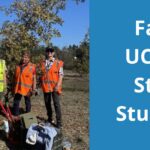
LUNA members join Community Forester Elizabeth for a tree care session.
LUNA, based in East San Jose, supports local leaders in advancing community issues ranging from housing and safety to climate justice. Their participation in this course stood out because they completed the entire program in Spanish, a powerful reminder that language access is environmental justice. Without it, communities cannot fully participate in environmental programs or decisions. Urban forestry has long lacked Latino and immigrant representation, making this cohort’s presence an important step toward more inclusive environmental leadership.
When asked what motivated them to join, the LUNA participants shared a common goal: to learn and bring that knowledge back to their neighbors. Through years of community outreach, they’ve seen that while families want trees, they often lack information about proper planting and maintenance, especially when resources aren’t available in their language.
Rita Birrueta, originally from Michoacán, Mexico, described how essential this knowledge is. She recalled a school planting project where, due to limited maintenance skills and irrigation issues, only one tree survived. Experiences like this fuel their commitment to helping East San Jose plant and care for trees successfully, contributing to cleaner air and a healthier urban environment.
For many of these women, connecting with the land is a lifelong tradition.
Both shared that learning technical skills, such as eliminating air pockets when planting, proper
pruning, and long-term tree care, has empowered them to support their neighbors with
confidence while helping families avoid unnecessary expenses.
When the women spoke about the impact of expanding tree canopy in their neighborhoods,
their responses revealed both personal experience and community vision.
Their answers reflect a shared understanding that urban greening is about far more than beautification. It’s about health, dignity, and environmental justice.
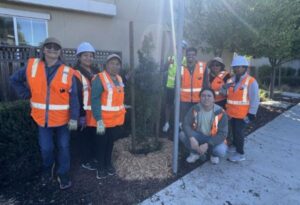
LUNA members plant a tree in an East Palo Alto neighborhood.
The Luna cohort appreciated both the community building and the hands-on learning.
One of the most meaningful aspects of the course for the women was participating in a cohort of fellow Latina leaders. Many expressed gratitude for being in a space where they felt included, respected, and encouraged to grow.
The Spanish-speaking LUNA cohort is an inspiring example of what inclusive environmental education can achieve. Their participation expands who is seen as an environmental leader and ensures that the communities most impacted by climate change have a rightful place in shaping solutions.
Through language access, shared experience, and a deep commitment to their neighborhoods, these women are paving the way for a greener, healthier East San Jose – and they’re bringing their community along every step of the way.